Short answer: Money in Vietnam works best with a mix: Vietnamese dong (VND) cash for street food, markets and small shops, plus a debit or credit card for hotels, flights and larger bills. Withdraw VND from bank ATMs in large amounts to limit fees, always decline currency conversion, and never pay in US dollars.
Last updated: November 2026
This guide to money in Vietnam covers the whole country, from Hanoi to the Mekong Delta: which notes you will handle, how ATMs treat foreign cards, where to exchange cash, where cards and QR codes work, and the small mistakes that cost travellers the most. All rates and rules were checked in November 2026.
What currency does Vietnam use, and what is it worth?
Vietnam uses the Vietnamese dong (VND, written đồng), and in mid-November 2026 one US dollar bought about VND 25,500 in cash. On 16 November 2026, Vietcombank, one of the country's largest banks, bought US dollar cash at VND 25,520 and sold at VND 25,930; it bought euro cash at about VND 27,630 (source: Vietcombank exchange-rate table, checked November 2026).
A quick way to convert in your head: drop the last three zeros and divide by 25. A VND 100,000 note is therefore about US$4, and VND 1,000,000 is about US$39.
Notes run up to VND 500,000. The large notes are printed on polymer, a plastic material that survives rain and sweat far better than paper; the State Bank of Vietnam lists the VND 500,000 note as polymer since 2003 and the VND 200,000 note since 2006 (source: sbv.gov.vn, checked November 2026).
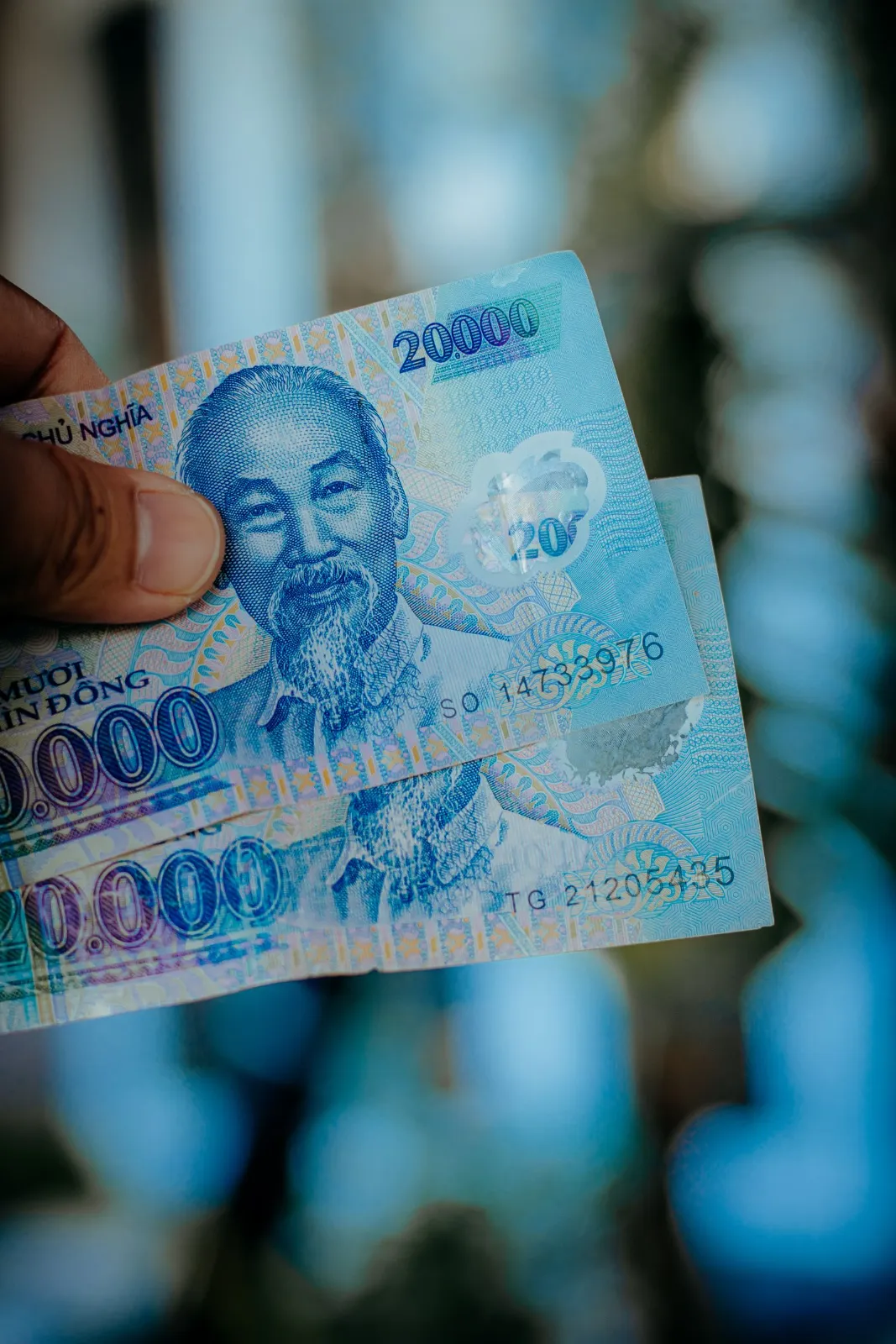
The 20,000 vs 500,000 mix-up
The VND 20,000 note is dark blue and the VND 500,000 note is blue, according to the State Bank of Vietnam's banknote descriptions. In dim light or in a hurry, the two look alike, yet one is worth 25 times the other. Keep large notes in a separate pocket of your wallet and check the number of zeros every time you hand one over.
Should you bring cash, cards or both?
Bring both: cash is still essential for daily spending in Vietnam, while a card covers bigger bills and acts as your backup. Most travellers do well with one debit card for ATM withdrawals, one credit card for hotels and bookings, and a small amount of US dollars or euros for emergencies.
| What you are paying for | Usually works | Tip |
|---|---|---|
| Street food, markets, small cafés | Cash (VND) | Carry VND 10,000 to 100,000 notes |
| Hotels, resorts, cruise and tour bookings | Card or bank transfer | Ask whether a card surcharge applies |
| Supermarkets, malls, chain restaurants | Card, QR code or cash | Contactless is common in big cities |
| Ride-hailing apps | Card in the app, or cash | Add a card before you arrive |
| Entrance fees at parks and sights | Mostly cash; some counters take cards | Keep exact change for ticket booths |
| Rural areas, small islands, homestays | Cash | Withdraw before you leave the city |
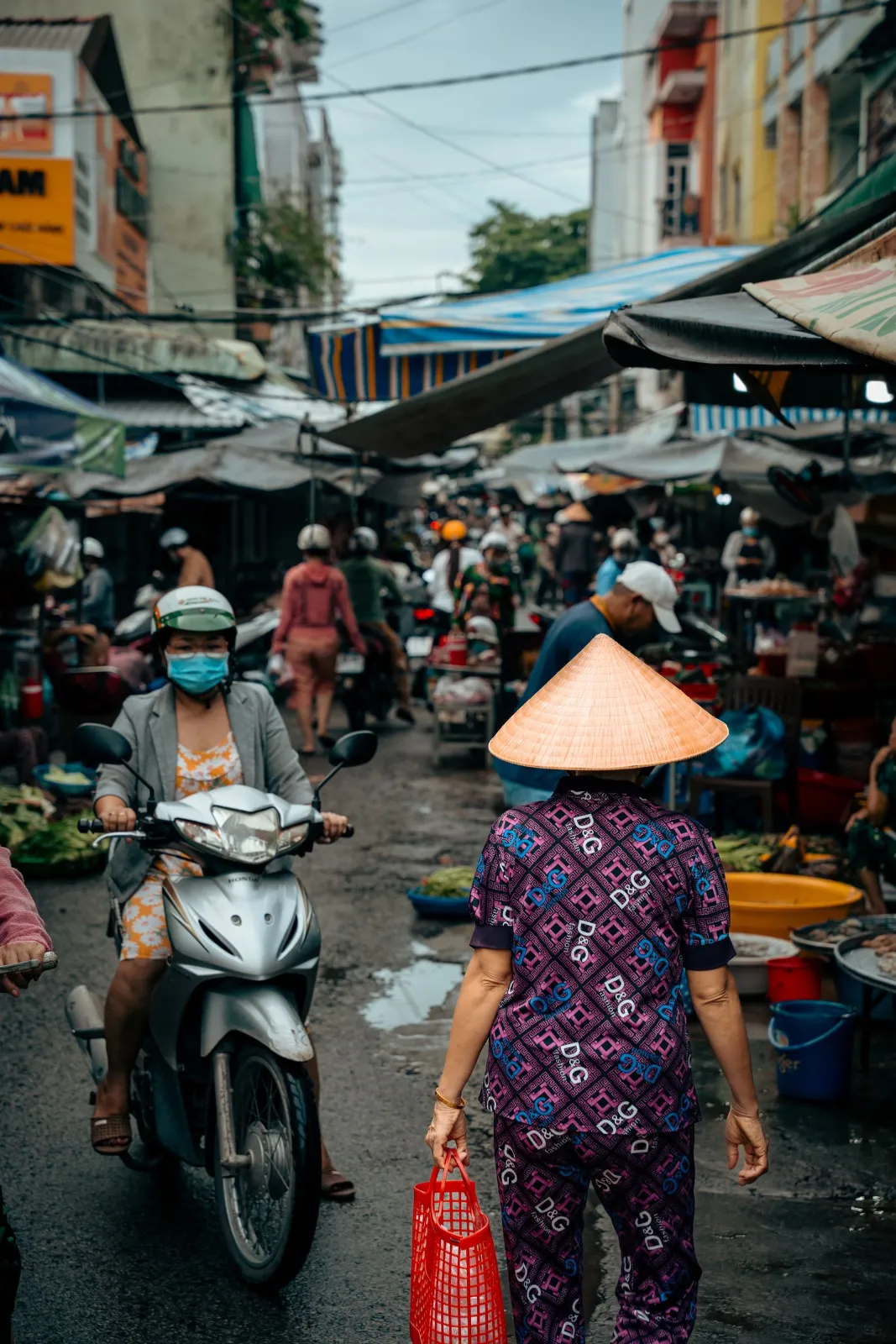
For a realistic picture of how much you will spend each day on rooms, food and transport, see our Vietnam travel cost per day guide.
How do ATMs in Vietnam work with foreign cards?
Bank ATMs across Vietnam accept Visa and Mastercard debit cards, but most charge foreign cards a fee of roughly VND 20,000 to 55,000 per withdrawal, and each withdrawal is capped at VND 2 to 10 million. Your own bank may add its own foreign transaction fee on top.
A 2026 survey of Vietnamese ATM charges found that some banks charge about 3.3% of the amount instead of a flat fee, and that fees are often quoted before 10% VAT, which is why VND 50,000 shows on screen as VND 55,000 (checked November 2026). The same survey reports VPBank as the most consistently fee-free option, with a VND 10 million cap, and ACB as free but capped at VND 3 million. Fees change, so always read the fee screen before you confirm.
| ATM charge | Typical range (2026) | How to reduce it |
|---|---|---|
| Local ATM operator fee | VND 20,000–55,000 flat, or about 3.3% | Withdraw the maximum each time |
| Per-withdrawal cap | VND 2–10 million | Use a bank with a high cap |
| Dynamic currency conversion | Estimated 5–10% worse than the interbank rate | Always choose to be charged in VND |
| Your home bank's fees | Depends on your card | Use a travel-friendly debit card |
Practical steps that save money and stress:
- Use ATMs inside or next to a bank branch, ideally during opening hours, so staff can help if the machine keeps your card.
- Decline conversion. If the screen offers to charge you in your home currency, refuse and pick VND.
- Take your card first. On many Vietnamese machines the cash comes out before the card, and the machine can swallow a card that is left behind.
- Withdraw before remote trips. ATMs thin out on small islands and in mountain villages; stock up in the city before a cruise, a homestay or a long bus ride.
Where should you exchange money in Vietnam?
Exchange cash at a bank, a licensed exchange counter or a bank booth at the airport; banks give the most transparent rates and a receipt. US dollars and euros are the easiest currencies to exchange across Vietnam, and the rate is published daily on each bank's website.
Gold and jewellery shops in Hanoi and Ho Chi Minh City are well known for exchanging US dollars, sometimes at good rates. However, buying or selling foreign currency outside licensed places breaks Vietnam's foreign-exchange rules; a widely reported 2018 case in Can Tho led to a VND 90 million fine for changing a single US$100 bill, Tuoi Tre News reported. The penalty rules have since been revised, but the safest choice is still a bank or licensed counter.
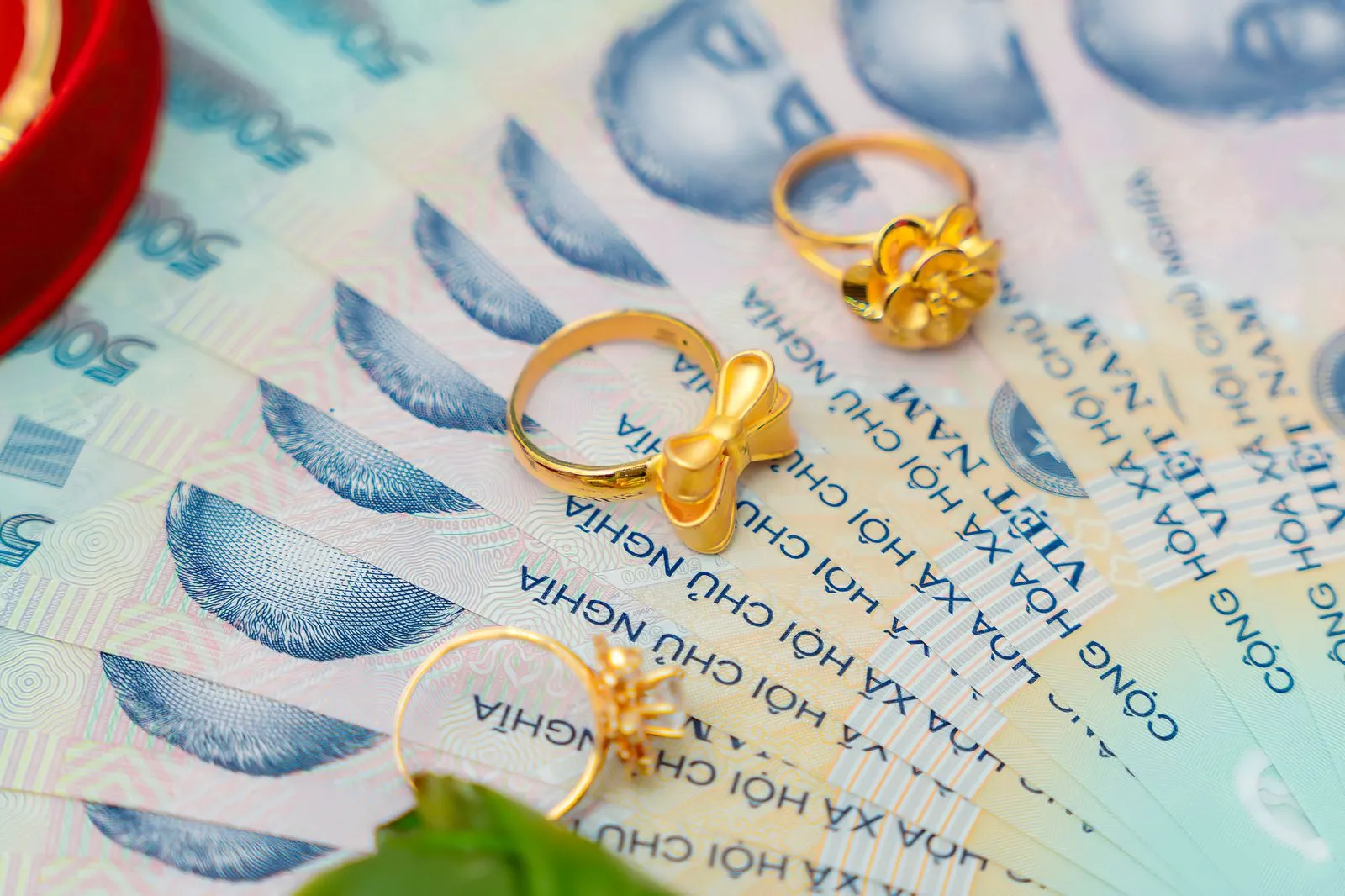
Banks can be strict about the condition of foreign notes. Bring clean, unfolded US dollar or euro notes without tears or ink marks,; large bills such as US$100 are the easiest to change.
Airport exchange desks are convenient for a first taxi or meal. Compare their board with the bank rate on your phone, change only enough for the first day, and use an ATM or bank in town for the rest.
Can you pay by card or QR code in Vietnam?
Cards are widely accepted at hotels, airlines, supermarkets, malls and mid-range restaurants in Vietnam's cities, while smaller places prefer cash or Vietnamese QR codes. Away from big towns, assume cash only unless you see a card sign at the counter.
QR payments are where Vietnam is changing fastest. Most local shops display a VietQR code that Vietnamese bank apps can scan, and since late 2025 visitors from a growing list of countries have been able to scan the same codes with apps from home. Vietnam has cross-border QR links with China, South Korea, Thailand, Laos, Cambodia and Singapore, according to Tuoi Tre News in August 2026.
In June 2026 the national payment switch NAPAS and payment firm Payoo introduced VietQRGlobal, a service that lets foreign visitors pay at Vietnamese merchants through their own banking apps or e-wallets, with an Alipay payment demonstrated at launch. In August 2026 NAPAS, BIDV and Weixin Pay (WeChat Pay) announced an expansion of QR payments between Vietnam and China.
What this means in practice: if you hold a banking app from one of those countries, check before you travel whether it supports Vietnam QR payments. If you come from Europe, North America or Australia, plan on cards and cash, because most Western banking apps cannot yet scan Vietnamese QR codes.
How much cash should you carry each day?
For most travellers, VND 500,000 to 1,000,000 (about US$20 to US$39) in cash per person per day covers food, drinks, local transport and small entrance fees, with hotels and tours paid by card. Carry more on days you visit markets, islands or rural areas where cards are rare.
Entrance fees are a good example of cash you cannot avoid. A day visit to Ha Long Bay costs an adult VND 200,000 to 250,000, and Lan Ha Bay VND 120,000; cruises usually include these, but some cheaper day trips collect them separately (see our Ha Long Bay vs Lan Ha Bay comparison for the full fee table).
Break large notes early. Street vendors, small cafés and parking attendants often struggle to change a VND 500,000 note for a VND 30,000 purchase. Use big notes at supermarkets, hotels and convenience stores, and keep a stack of VND 10,000 to 50,000 notes for everything else.
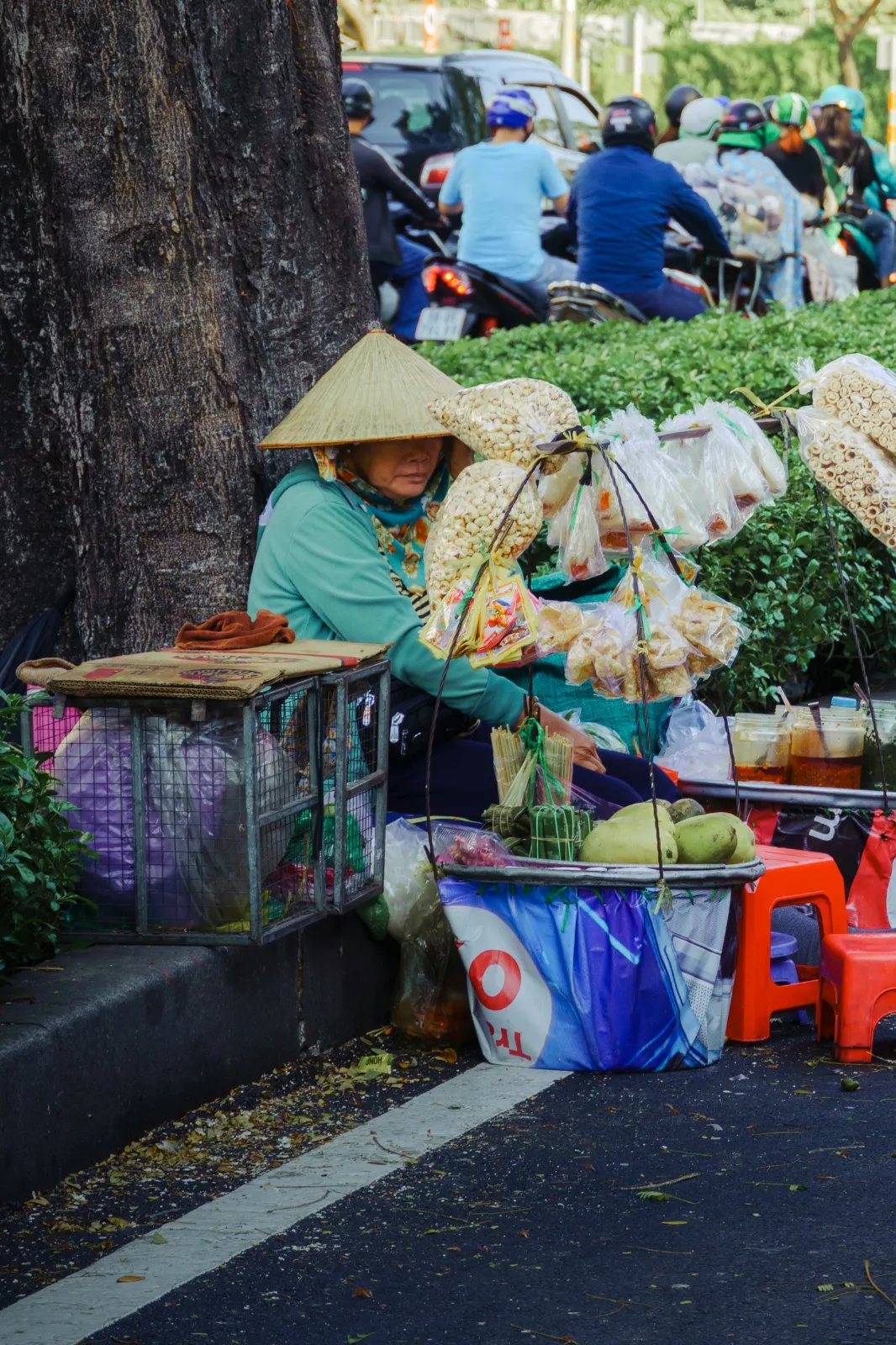
Transport is the other daily cash item. Long-distance buses and some ferries take cash at the counter, while trains and domestic flights are easy to pay by card online. Our guide to getting around Vietnam explains which tickets you can book in advance.
How much cash can you bring into Vietnam?
There is no upper limit, but you must declare cash to customs on arrival or departure if it exceeds US$5,000 (or the equivalent in other foreign currencies) or VND 15 million. These are declaration thresholds, not bans, Tuoi Tre News explained in September 2026 (checked November 2026).
Failing to declare can lead to seizure of the cash and, in serious cases, a criminal investigation. If you are travelling with savings for a long stay, it is simpler to declare at the airport than to explain later why you did not.
Common money mistakes in Vietnam
The most expensive mistakes are confusing note values, accepting currency conversion at ATMs or card machines, and paying prices quoted in US dollars. Each is easy to avoid once you know about it.
- Mixing up the VND 20,000 and VND 500,000 notes. Both are blue; check the zeros before handing one over.
- Accepting dynamic currency conversion. Card terminals and ATMs may offer to charge you in your home currency; choose VND.
- Paying in US dollars. Under Vietnam's 2005 Ordinance on Foreign Exchange, prices and payments must be in dong, Tuoi Tre News explains; a shop that quotes in dollars also tends to give a poor rate.
- Not counting change. Count your change at the counter, especially when large notes are involved; honest mistakes happen with so many zeros.
- Running out of cash on an island or in the mountains. Withdraw enough before you leave the city.
- Keeping only one card. Bring a backup card stored separately, in case an ATM keeps the first one.
Do you need to tip in Vietnam?
Tipping is not expected in everyday Vietnamese restaurants, cafés or taxis, but it is appreciated for good service. Rounding up a bill or leaving small change is common practice among visitors.
Tips are more usual for tour guides, drivers on private day trips, and crew on overnight cruises, where many travellers leave a tip at the end. Spa staff in tourist areas often expect a small tip as well. Check whether a service charge is already on the bill at upmarket restaurants and hotels before adding more.
Frequently asked questions
Can I use US dollars in Vietnam?
US dollars are easy to exchange in Vietnam, but you should pay for goods and services in Vietnamese dong. Shops that accept dollars usually apply a poor rate, so change dollars at a bank and spend dong.
Which ATM in Vietnam has no fee for foreign cards?
VPBank is the bank most often reported as fee-free for foreign cards in 2026, with a withdrawal cap of VND 10 million. Fees change, so check the fee screen before confirming, and remember your own bank may still charge.
Is it better to exchange money before going to Vietnam?
It is usually better to exchange money or withdraw cash after you arrive in Vietnam, because dong rates abroad are often poor. Bring a small amount of US dollars or euros as a backup and use a bank or ATM on arrival.
Are credit cards widely accepted in Vietnam?
Credit cards are widely accepted at hotels, airlines, supermarkets and larger restaurants in Vietnam's cities. Street food stalls, markets and many small shops accept only cash or Vietnamese QR codes.
How much cash can I bring into Vietnam without declaring it?
You can bring up to US$5,000 in foreign currency, or up to VND 15 million in dong, without a customs declaration. Above those amounts you must declare the cash, but there is no maximum limit.