
Short answer: Grab works well in Vietnam's big cities and at its main airports, and it shows a fixed GrabCar fare before you book. Set the app up before you fly, pay in Vietnamese dong cash or a linked card, and compare with Green SM, which carried more car trips than Grab in early 2026.
Last updated: November 2026
Grab is the ride-hailing app most travellers already know from Singapore, Thailand or Malaysia, and using Grab in Vietnam feels much the same. This guide covers the whole country, from Hanoi to Ho Chi Minh City and Phu Quoc: how to set the app up, what airport rides really cost, where drivers wait, which fees appear on top of the fare, and when another app or a metered taxi is the better choice. Fares and rules were checked in November 2026.
Does Grab work everywhere in Vietnam?
Grab works in Vietnam's large cities and tourist hubs, including Hanoi, Ho Chi Minh City, Da Nang, Nha Trang and Phu Quoc, but cars are thinner on the ground in small towns and rural areas. Grab publishes airport ride pages for Noi Bai (Hanoi), Tan Son Nhat (Ho Chi Minh City), Da Nang, Cam Ranh (Nha Trang) and Phu Quoc, which is a good sign of where the service is busiest.
Grab is not the biggest car-hailing brand in Vietnam any more. A Mordor Intelligence report quoted by the business newspaper VnEconomy in April 2026 put Green SM (formerly Xanh SM, Vingroup's all-electric taxi brand) at 54.51% of the ride-hailing taxi market in the first quarter of 2026, Grab at 40.92% and Be at 4.57%. In practice, that means you should have a second app ready.
Away from the cities, for example in Ha Giang, Pu Luong or the smaller Mekong Delta towns, do not count on finding a Grab car within minutes. Ask your hotel to book a local taxi or car instead, especially for early-morning departures.
How do you set up Grab before you arrive in Vietnam?
The easiest way to use Grab in Vietnam is to install the app and verify your account at home, because Grab confirms your phone number by SMS. Once you land, a local SIM, an eSIM or airport Wi-Fi is enough to book.
- Install Grab and register with your home mobile number while your home SIM still receives texts.
- Add a payment method: link a Visa or Mastercard, or plan to pay cash. Keep cash as a backup in case your card is declined.
- Save key addresses such as your hotel, written in Vietnamese with accents if you have them. Drivers search by Vietnamese street names.
- Turn on location access so the pin lands where you are standing, not on the other side of a busy road.
- Check the vehicle type before you tap Book: GrabCar seats up to 4, GrabCar 7 seats up to 7 passengers with more luggage space.

GrabChat translates messages automatically, so you can type in English and the driver reads Vietnamese. Grab also shows an upfront fixed fare for GrabCar, so you know the price before you book; the exception is GrabTaxi, which runs on the meter (source: Grab, checked November 2026).
How much does Grab cost from Vietnam's main airports?
A GrabCar from Noi Bai airport to central Hanoi costs about VND 250,000–350,000 (roughly US$10–14), while Tan Son Nhat to central Ho Chi Minh City costs about VND 120,000–200,000 (US$5–8). These are Grab's own published averages, checked November 2026; the fare you see in the app changes with traffic, time and demand.
| Airport | Distance to centre | Typical drive | Average GrabCar fare (VND) |
|---|---|---|---|
| Noi Bai (HAN), Hanoi | 27 km | 40 min | 250,000–350,000 |
| Tan Son Nhat (SGN), Ho Chi Minh City | 7 km | 25–40 min | 120,000–200,000 |
| Cam Ranh (CXR), Nha Trang | 35 km | 45 min | 250,000–350,000 |
| Phu Quoc (PQC) | 10 km | 15 min | 120,000–180,000 |
| Da Nang (DAD) | 3–5 km | 10–15 min | 70,000–120,000 |
Source: Grab airport ride pages, checked November 2026. US dollar figures use about VND 25,500 per US$1.
For Da Nang, our sister site compares Grab, taxis and private cars from Da Nang airport in detail. For the overall picture of ride costs across a trip, see our Vietnam travel cost per day guide.
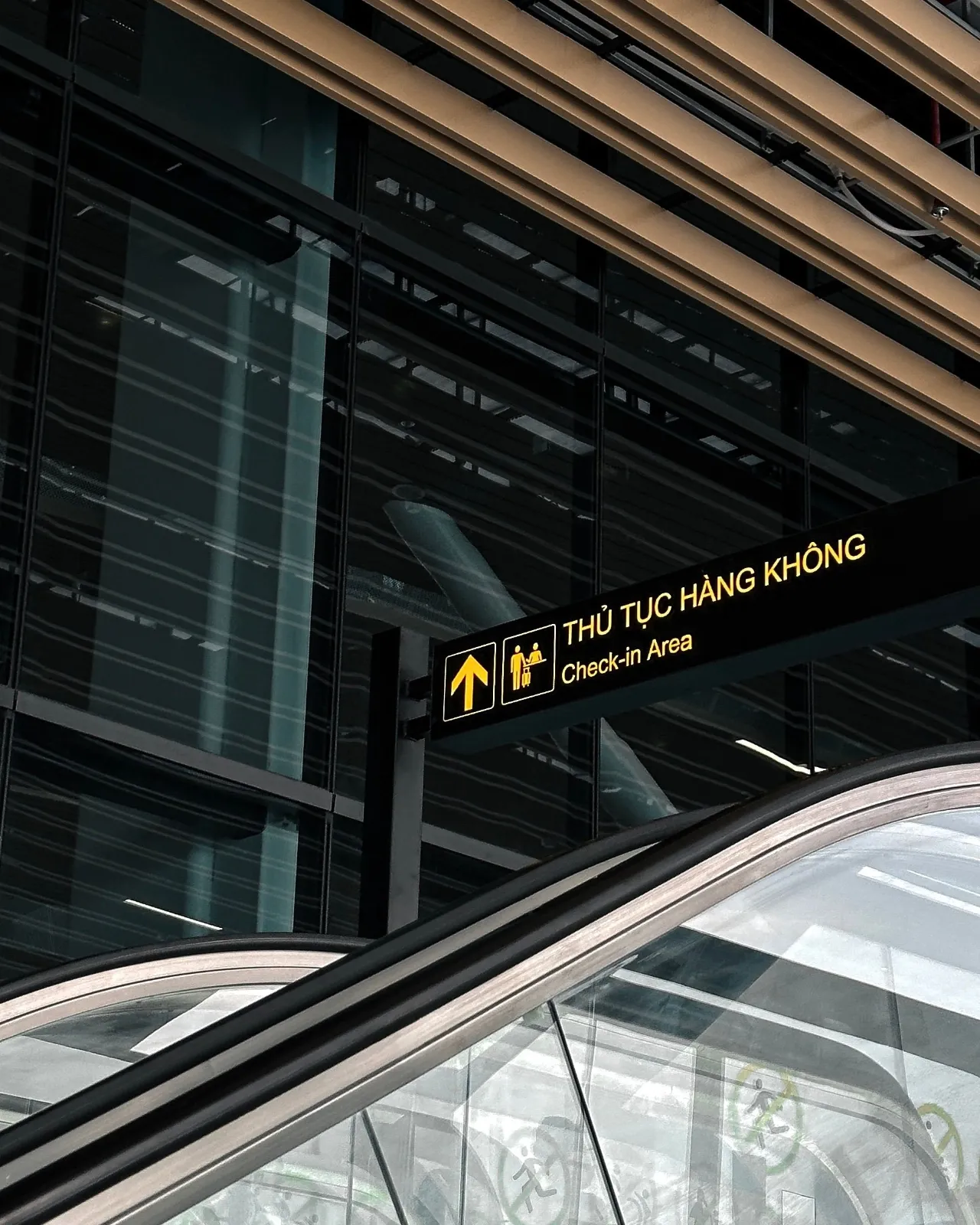
Where do you meet your Grab driver at Noi Bai and Tan Son Nhat?
At Hanoi's Noi Bai airport, GrabCar pick-ups moved on 3 August 2026: at Terminal 2 (international) you meet the driver in car park P1 or P7, and at Terminal 1 (domestic) in lane 3 in front of Hall E (source: Grab Vietnam, checked November 2026). Older blog posts that mention "pillar 8" or "pillar 11" describe the previous layout.
Noi Bai airport rules do not let drivers stop for more than 5 minutes at a pick-up point, so book only when you have your bags and are walking out. If you book from the baggage belt, the driver may have to circle, and the app can cancel the trip.
At Ho Chi Minh City's Tan Son Nhat airport, the new domestic Terminal 3 has had its own GrabCar pick-up since 19 June 2025: go down to the ground floor and follow signs to the PNA car park, where Grab has a marked waiting area. Each terminal at Tan Son Nhat has its own pick-up zone, so check which terminal you landed at before you book.
What fees are added to a Grab fare in Vietnam?
A Grab fare in Vietnam can include a platform fee, airport access charges and, during Tet, a holiday surcharge. None is large, but together they explain why the final price is often a little higher than the base fare you expected.
| Fee | Amount | When it applies |
|---|---|---|
| GrabCar platform fee | VND 3,000 (up to 3 km), VND 4,000 (3–4 km), VND 5,000–9,000 (longer trips) | 10 November 2026 to 25 February 2027 |
| Platform fee, new system | 7% of the fare and surcharges, VAT included | From 26 February 2027 |
| Airport operation fee | VND 10,000 per trip | From 26 February 2027, for pick-ups at Tan Son Nhat, Da Nang, Cam Ranh and Phu Quoc |
| Noi Bai airport access fee | VND 9,000 for the first 10 minutes, then VND 4,000 per 30 minutes | Cars entering Noi Bai airport |
| Tet surcharge (2026 example) | VND 15,000 per GrabCar trip | 16–20 February 2026, 6:00–21:59 |
Source: Grab Vietnam notices dated 11 February, 5 August and 5 November 2026, checked November 2026. Grab also announced a 10% discount on trips of 10 km or more from 26 February to 31 December 2027, under its own terms.
The Tet surcharge is the one to plan for. Lunar New Year 2027 falls in early February, and if Grab repeats the 2026 pattern, every car trip in the main holiday days will cost a little more and cars will be harder to find. Our getting around Vietnam guide explains how Tet also affects trains, buses and flights.
How do you pay for Grab in Vietnam?
You can pay for Grab in Vietnam with cash in Vietnamese dong or with a card linked in the app; Grab's airport pages also list cashless options such as WeChat Pay and Alipay. Cash is the safest backup because it always works, even when a foreign card is refused.
If you pay cash, carry small notes. A driver may not have change for a VND 500,000 note on a VND 60,000 ride, especially early in the morning. Never pay in US dollars: the price in the app is in dong, and any conversion the driver offers will cost you more.
If you pay by card, check your bank's foreign transaction fee before the trip. For a full breakdown of ATMs, cards and cash, read our guide to money in Vietnam.
Grab, Green SM, Be or a metered taxi: which should you use?
Use Grab when you want an app you already know, Green SM when Grab shows long waits or high prices, and a reputable metered taxi when your phone has no data. All four are legal, common and reasonably priced in Vietnam's cities.
| Option | Best for | Price shown | Watch out for |
|---|---|---|---|
| Grab | First-time visitors, airport rides, English chat | Fixed before booking (except GrabTaxi) | Peak-hour price jumps, platform and airport fees |
| Green SM | City rides in all-electric cars | Shown in the app | A second account to set up; check payment options in the app |
| Be | Comparing prices in big cities | Shown in the app | Smaller fleet, about 4.6% market share |
| Metered taxi (Mai Linh, Vinasun and others) | No data, taxi ranks, hotel bookings | Meter | Look-alike taxis with altered names; insist on the meter |
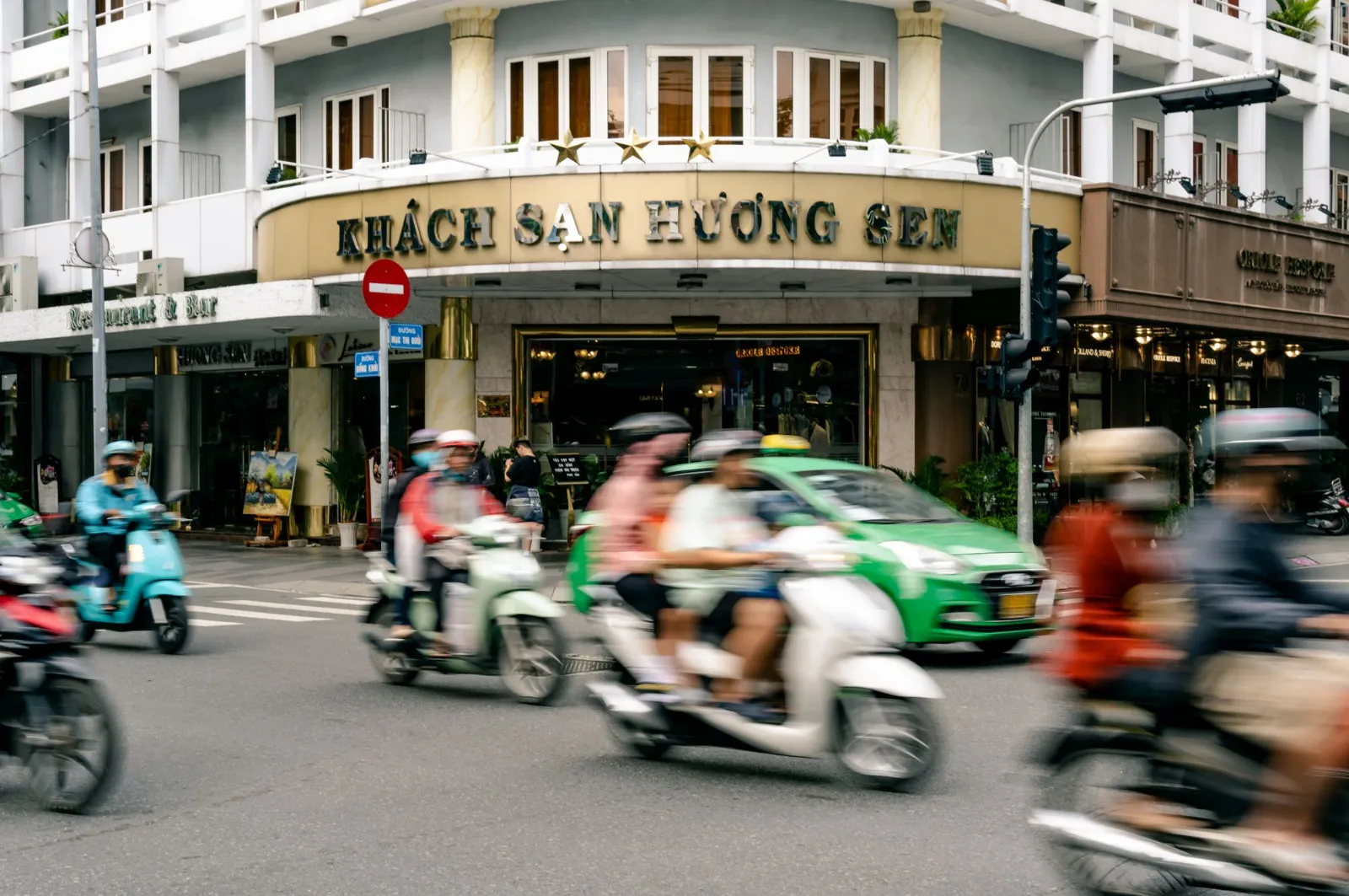
A simple rule works well: open two apps, compare the fixed prices, and take the cheaper one if the pick-up time is similar. Comparing takes less than a minute and can save a noticeable amount at busy times.
For long distances between cities, ride-hailing is rarely the best value. A sleeper bus, the train or a domestic flight usually costs less than a long GrabCar ride, as explained in our guide to trains, buses and domestic flights.

What are the most common Grab mistakes in Vietnam?
The most common Grab mistakes in Vietnam are booking too early at the airport, dropping the pin on the wrong side of the road and paying with a large note. Each one is easy to avoid.
- Booking from the baggage belt. Drivers can only wait a few minutes at airport pick-up points. Book when you are walking out.
- A pin on the wrong side of the road. In Hanoi's Old Quarter and on one-way streets in Ho Chi Minh City, a pin a few metres off can add a long loop. Move the pin to a corner or a named shop.
- Ignoring the plate number. Always match the licence plate and the driver's photo before you get in, especially at busy airport zones.
- Getting out early. If you leave the car before the destination you booked, Grab charges the full fare, so set the right drop-off at the start.
- Relying on one app at Tet or in heavy rain. Demand spikes during holidays and storms. Have Green SM or a taxi number ready.
Where does Grab fit into a Vietnam itinerary?
Grab is best for short city rides and airport transfers, not for the long legs of a trip. On a typical two-week route, you will mostly use it for airport runs, evenings out and short hops when it rains.
Pair it with trains, buses and flights for the long distances, as in our two-week Vietnam itinerary from north to south. In smaller places such as Sa Pa, Ninh Binh or the Mekong Delta, plan transport through your hotel rather than relying on an app.
Frequently asked questions
Is Grab safe to use in Vietnam?
Grab is widely used by locals and visitors in Vietnam, and every trip is tracked in the app with the driver's name, photo and plate number. You can share your live trip with a friend from the app, and you should always check the plate before getting in.
Can I use Grab in Vietnam with a foreign phone number?
Yes, you can register Grab with a foreign phone number, but you need to receive the SMS code, so it is easiest to set up the account before you leave home. After that, mobile data from a Vietnamese SIM, an eSIM or Wi-Fi is enough to book rides.
Is Grab cheaper than a taxi in Vietnam?
For most city rides, GrabCar and a metered taxi from a reputable company cost about the same, and Grab's advantage is that the price is fixed before you book. At peak times, Grab prices can rise, so compare with Green SM or take a metered taxi.
How much is a Grab from Hanoi airport to the Old Quarter?
Grab lists an average of VND 250,000–350,000 (about US$10–14) for a GrabCar from Noi Bai airport to central Hanoi, a drive of about 27 km and 40 minutes (checked November 2026). Airport access fees and the platform fee are added on top.
Do I tip Grab drivers in Vietnam?
Tipping Grab drivers in Vietnam is not expected, but it is appreciated for help with heavy luggage or a long wait. Rounding up a cash fare or adding a small tip in the app after the ride is enough.