
Short answer: Of the Mekong Delta floating markets, only Cai Rang in Can Tho still trades every morning at a scale worth a dedicated trip. Ngã Bảy, Cái Bè, Ngã Năm and Long Xuyên have faded or moved ashore. Stay a night in Can Tho, be on the water by 6:00 am and agree the boat price before boarding.
Last updated: November 2026
The Mekong Delta floating markets are among the most photographed sights in southern Vietnam, but many guides still describe markets that have largely disappeared. This guide explains which markets still run, when to go, how to reach Cai Rang, what a boat costs, what to eat on the water and how to avoid the problems visitors reported in 2026. Facts were checked in November 2026.
Which Mekong Delta floating markets are still worth visiting?
Cai Rang floating market (chợ nổi Cái Răng) in Can Tho is the one Mekong Delta floating market that still works as a daily wholesale market and still draws visitors in numbers. A 2024 Bao Van Hoa (Ministry of Culture newspaper) investigation found that Cai Rang was the only floating market in the delta that had kept its character and its pull for tourists.
The other famous names have shrunk sharply. Use the table below before you book a tour that promises "five floating markets".
| Market | Where (2026 province) | Status | Worth a special trip? |
|---|---|---|---|
| Cái Răng | Can Tho city | Trades every morning; busiest around sunrise | Yes |
| Ngã Bảy (Phụng Hiệp) | Former Hau Giang, now Can Tho city | Relocated by the authorities in 2022 and largely faded since | No |
| Cái Bè | Dong Thap (formerly Tien Giang) | A few boats on normal days; recreated for festivals | Only during an event |
| Ngã Năm | Former Soc Trang, now Can Tho city | Very few boats left | No |
| Long Xuyên | An Giang | Much smaller than in the past | Only if you are already passing |
Sources: Bao Van Hoa (August 2024), Tuoi Tre (December 2025 and February 2026), checked November 2026.
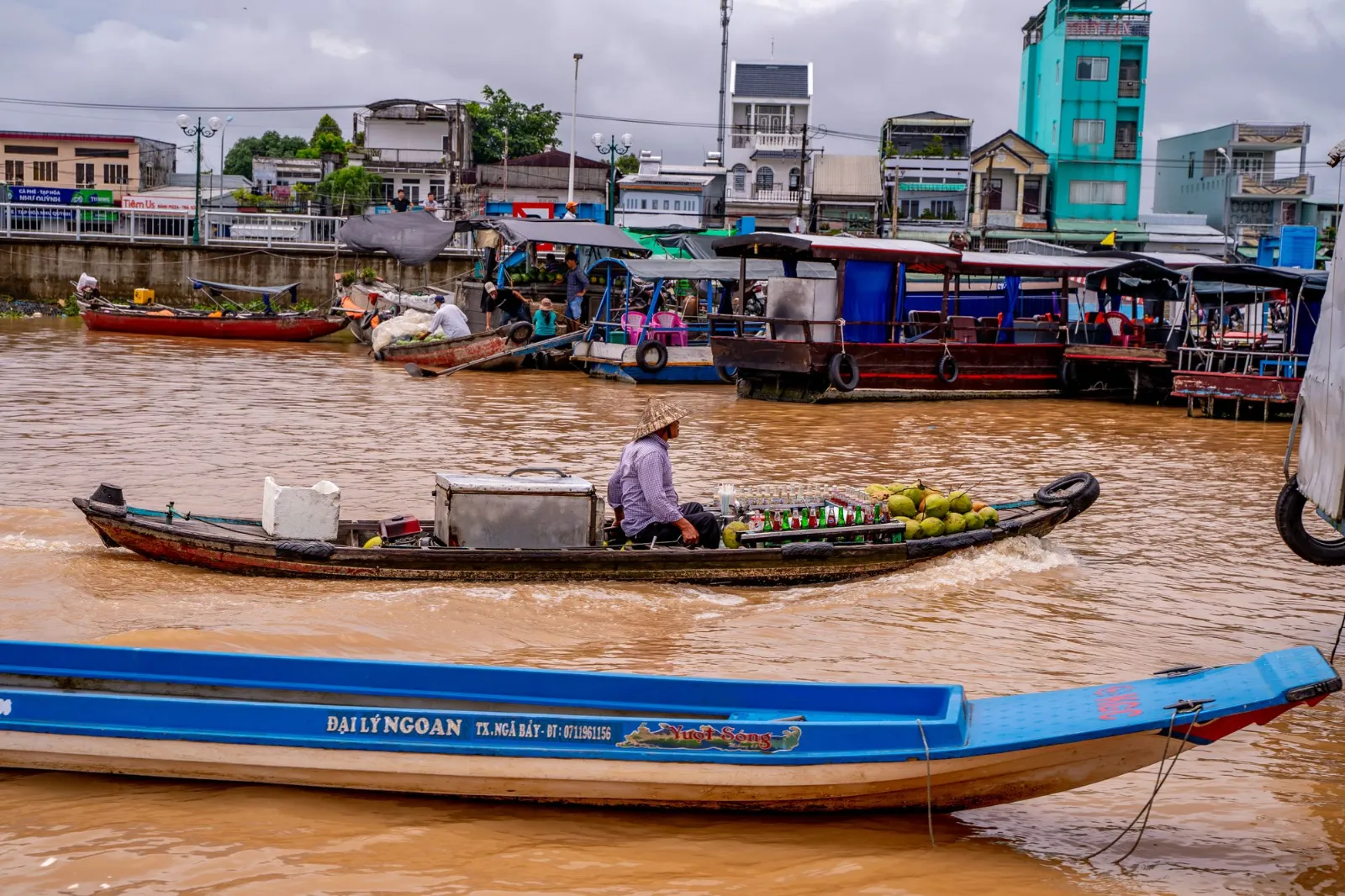
What is Cai Rang floating market, and why does it still matter?
Cai Rang floating market is a wholesale river market on the Can Tho River, where farmers and traders sell fruit and vegetables from boats to smaller buyers. It formed in the early 20th century, and in 2016 Vietnam's Ministry of Culture, Sports and Tourism listed it as a national intangible cultural heritage.
The market is a working market first and a tourist sight second. Large wooden boats anchor in the middle of the river, and smaller boats come alongside to buy by the sack. Most of the trade happens before 8:00 am.
Look for the cây bẹo, a tall bamboo pole tied to the bow of a boat. Traders hang a sample of what they sell, such as a pumpkin, a bunch of bananas or a cabbage, at the top of the pole, so buyers can see the goods from a distance without anyone shouting.

What time should you visit Cai Rang floating market?
Visit Cai Rang floating market between about 6:00 and 7:00 am, when the most boats are trading. By mid-morning the wholesale boats thin out and mainly tourist boats remain.
In practice, that means a boat from central Can Tho around 5:30 am. The market runs every day of the year, but the days just before Lunar New Year (Tet) are the busiest, with extra boats selling flowers and Tet produce.
The authorities in Can Tho have discussed opening the market to visitors in the evening as well. In January 2026, the city's vice-chair suggested developing night activities around the market, but as of November 2026 the market itself is a morning market.
How do you get to Cai Rang from Ho Chi Minh City?
Most visitors travel from Ho Chi Minh City to Can Tho by bus, then take a boat from Ninh Kieu Wharf (bến Ninh Kiều) in the city centre to the market. Bus tickets on the Ho Chi Minh City–Can Tho route ranged from VND 180,000 to 680,000 (about US$7–27) depending on seat type, with departures from 0:00 to 23:30 (source: MoMo bus ticket listings, checked November 2026).
The road trip takes roughly three and a half hours, which is why a day trip from Ho Chi Minh City to Cai Rang does not work: you cannot reach the market by 6:00 am without leaving in the middle of the night. Stay at least one night in Can Tho. Our two-week Vietnam itinerary shows how to fit one Mekong night into a north-to-south trip.
From Ninh Kieu Wharf, the boat route to Cai Rang follows the Can Tho River and passes under three bridges: Quang Trung, Hung Loi and Cai Rang (source: Tuoi Tre, January 2026). Sit on the side facing the riverbank for the best view of stilt houses and morning life along the way.
For more on long-distance buses, trains and flights, see our guide to getting around Vietnam. Inside Can Tho, ride-hailing apps work for short hops between your hotel and the wharf; our guide to using Grab in Vietnam explains fares and payment.
How much does a boat to Cai Rang floating market cost?
A private wooden tourist boat to Cai Rang cost between VND 300,000 and 1,500,000 (about US$12–59) in 2026, depending on the size of the boat and how long the route is (source: VnTravelLive survey, February 2026). Shared boats and hotel-organised trips are often cheaper per person.
Prices are not always posted, and this is where problems start. During Tet in February 2026, readers of Tuoi Tre complained of price gouging, aggressive touts and poor toilets around the market. On 22 February 2026, the local ward stopped all passenger boats from using the pier at the foot of Cai Rang bridge "until further notice" because of price gouging and safety concerns (source: Tuoi Tre, February 2026).
To stay out of trouble, follow three rules:
- Book through your hotel or a registered operator at Ninh Kieu Wharf, and get the price, the route and the return time in writing or in a message.
- Agree on what is included: the market only, or the market plus a rice-noodle workshop and a fruit garden. Longer routes cost more.
- Ignore touts who approach you near Cai Rang bridge. Check with your hotel whether the Cai Rang bridge pier has reopened before using it.
Carry small Vietnamese dong notes for the boat, snacks and tips; cards are rarely accepted on the water. Our guide to money in Vietnam covers ATMs and cash.
What can you eat and drink on the floating market?
At Cai Rang you can buy breakfast and drinks from small boats that pull up beside yours: noodle soup, iced coffee, fresh coconuts and whole pineapples cut to order are the usual offerings. The seller hands the bowl or glass across the gap between the boats, and you pay in cash.
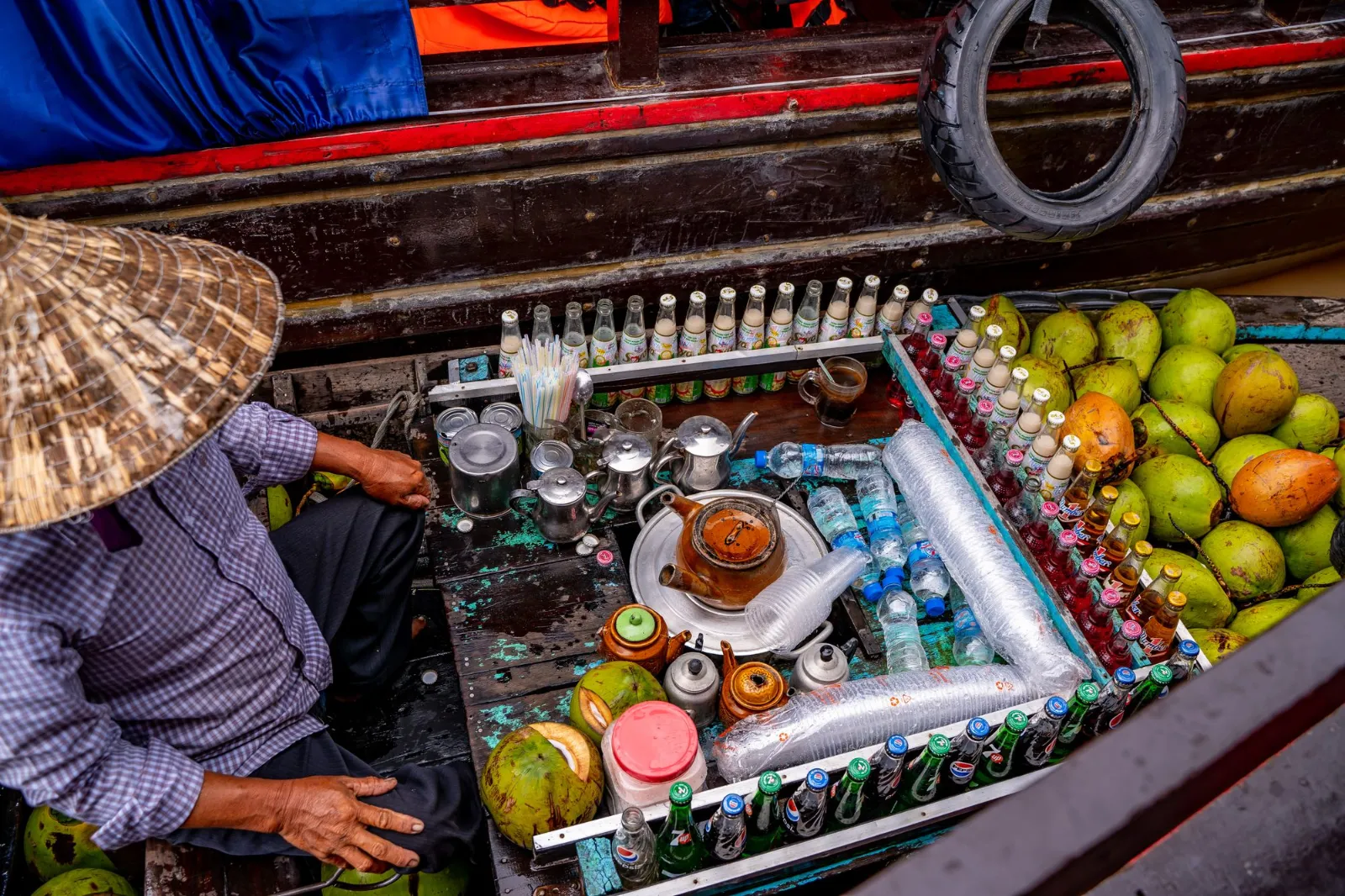
Fruit is sold wholesale, so the big boats may not want to sell you a single mango. Buy from the small retail boats instead, or wait for the fruit gardens that many routes include after the market. Hủ tiếu, a clear pork-broth noodle soup, is the classic Can Tho breakfast, and it is easy to find both on the water and on land.
If you care about food safety, the usual rules apply: choose stalls that cook to order, and peel your fruit. Our Vietnam travel cost guide lists typical food prices across the country.
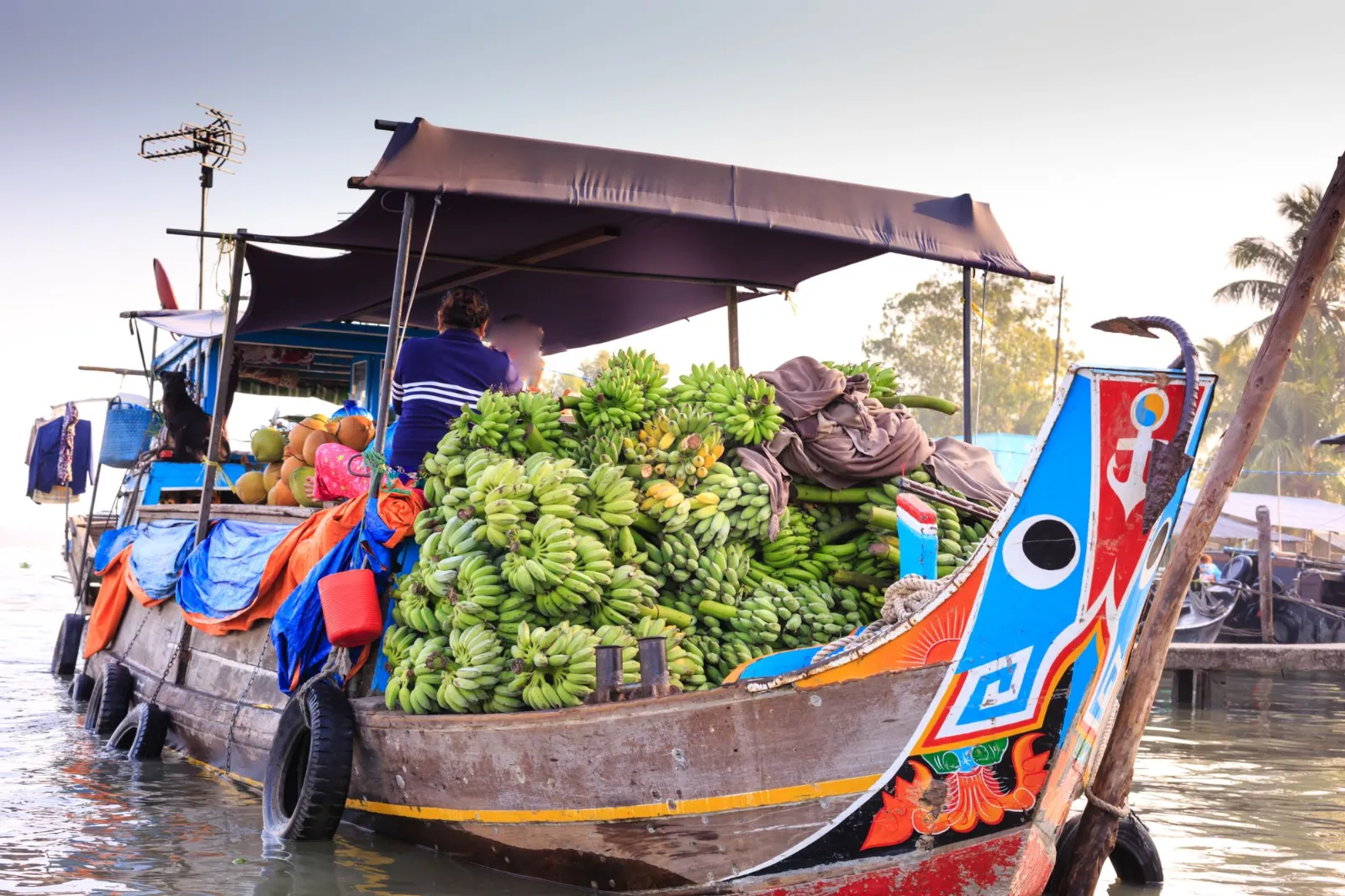
Is Cai Bè floating market still worth it?
Cái Bè floating market is worth a visit only when it is recreated for a festival; on normal days few trading boats remain. The market dates from the late 17th century, but local efforts to preserve it since 2017 have not brought the boats back, according to Bao Van Hoa.
On 4 December 2025, Dong Thap province recreated the old market on the Cai Be River as part of the sixth Dong Hoa Hiep Ancient Village Culture and Tourism Festival, with dozens of boats selling durian, mandarins, pomelos and vegetables (source: Tuoi Tre, December 2025). If your dates match a festival like this, Cai Be can be a pleasant stop on a day out from Ho Chi Minh City. Otherwise, choose Cai Rang.
What are the most common mistakes when visiting the floating markets?
The most common mistake is arriving too late, followed by booking a day trip from Ho Chi Minh City that reaches the delta after the market has finished. Both are easy to avoid with one night in Can Tho.
- Arriving after 8:00 am. You will see more tourist boats than traders.
- Not agreeing the price first. The 2026 complaints were mostly about prices changed during or after the trip.
- Booking a "floating market" day tour from Ho Chi Minh City without checking which market it visits. A tour that does not reach Cai Rang by sunrise will show you very few trading boats.
- Forgetting rain gear. The wet season in the south runs from May to November, and short heavy showers are common.
- Standing up on a moving boat to take photos when larger boats pass and the wake hits.
Frequently asked questions
Can I visit Cai Rang floating market as a day trip from Ho Chi Minh City?
It is not practical, because Can Tho is about three and a half hours from Ho Chi Minh City by road and the market is busiest between 6:00 and 7:00 am. Stay one night in Can Tho and take a boat from Ninh Kieu Wharf before sunrise.
Which is the biggest floating market in the Mekong Delta?
Cai Rang floating market in Can Tho is the biggest and best-known floating market in the Mekong Delta that still trades every morning. It was listed as a national intangible cultural heritage in 2016.
How much should I pay for a boat to Cai Rang floating market?
A private tourist boat cost between VND 300,000 and 1,500,000 in 2026, depending on boat size and route length. Agree the price, the route and the return time before boarding, and book through your hotel or a registered operator at Ninh Kieu Wharf.
Is the floating market open every day?
Yes, Cai Rang floating market trades every morning, including weekends and holidays. It is busiest in the days before Tet, when extra boats sell flowers and festive produce.
Are the Mekong Delta floating markets disappearing?
Many of them are, because better roads have moved trade onto land. Ngã Bảy, Cái Bè, Ngã Năm and Long Xuyên have all lost most of their boats, while Cai Rang survives but faces problems with pricing and management.