
Short answer: For most travellers, the best place to stay in Sapa (Sa Pa) is the town centre for the first night, then one night in a Muong Hoa valley village such as Ta Van for walking. Choose Ta Phin for Red Dao herbal baths, and Ban Ho only if you want a remote base about 25 km out.
Last updated: November 2026
Where to stay in Sapa matters more than in most Vietnamese towns. Sapa is a mountain town in Lao Cai province in northwest Vietnam, a little over 300 km from Hanoi by road. The town sits on a ridge at roughly 1,500–1,600 m, and the villages most people sleep in lie below it in the Muong Hoa valley or on side roads 7–25 km away. Your base decides how much time you spend in cars, how cold your room gets and how easy dinner is.
This guide compares the five realistic bases and gives a simple way to split your nights. If you have not booked transport yet, read our guide to getting from Hanoi to Sapa first, because your arrival time matters.
Where to stay in Sapa: which area suits you?
Sapa town centre suits a first night and short trips; Ta Van and Lao Chai suit walkers who want a homestay night; Ta Phin and Ban Ho suit travellers with three or more nights who want quiet. The table compares them side by side. Distances are approximate road distances from the town centre, checked November 2026.
| Area | Distance from town centre | Best for | Main trade-off |
|---|---|---|---|
| Sa Pa town centre (around the lake and stone church) | 0 km | First night, one-night trips, families, cold or rainy months | Busy streets and construction; views depend on the room |
| Edge of town near Cat Cat village | About 2–4 km | Short walks into the valley without a transfer | Cat Cat is a ticketed tourist village and gets crowded by day |
| Ta Van and Lao Chai (Muong Hoa valley) | About 7–10 km | Walking days and a first homestay night | Simpler rooms, few shops, roads can be cut after heavy rain |
| Ta Phin (Tả Phìn) | About 10 km | Red Dao herbal baths, a quieter village stay | Fewer places to eat; you rely on your host |
| Ban Ho (Bản Hồ) | About 25 km | Two or more slow nights by the streams | Long transfer and limited supplies |
One quick rule: if you have only one night, sleep in town. If you have two, split them between town and the valley. If you have three or more, add Ta Phin or Ban Ho.
Is Sapa town a good base?
Sapa town is the most practical base because restaurants, pharmacies, ATMs, bus offices and guides are all within walking distance. It is also where buses from Hanoi stop and where the shuttles from Lao Cai station end, about 35 km and roughly an hour from the railway.
The centre clusters around Sa Pa Lake and the old stone church. Streets climb steeply, so a hotel "five minutes from the lake" can mean a stiff uphill walk. Ask for a room facing the valley if views matter; many town rooms look at the next building.
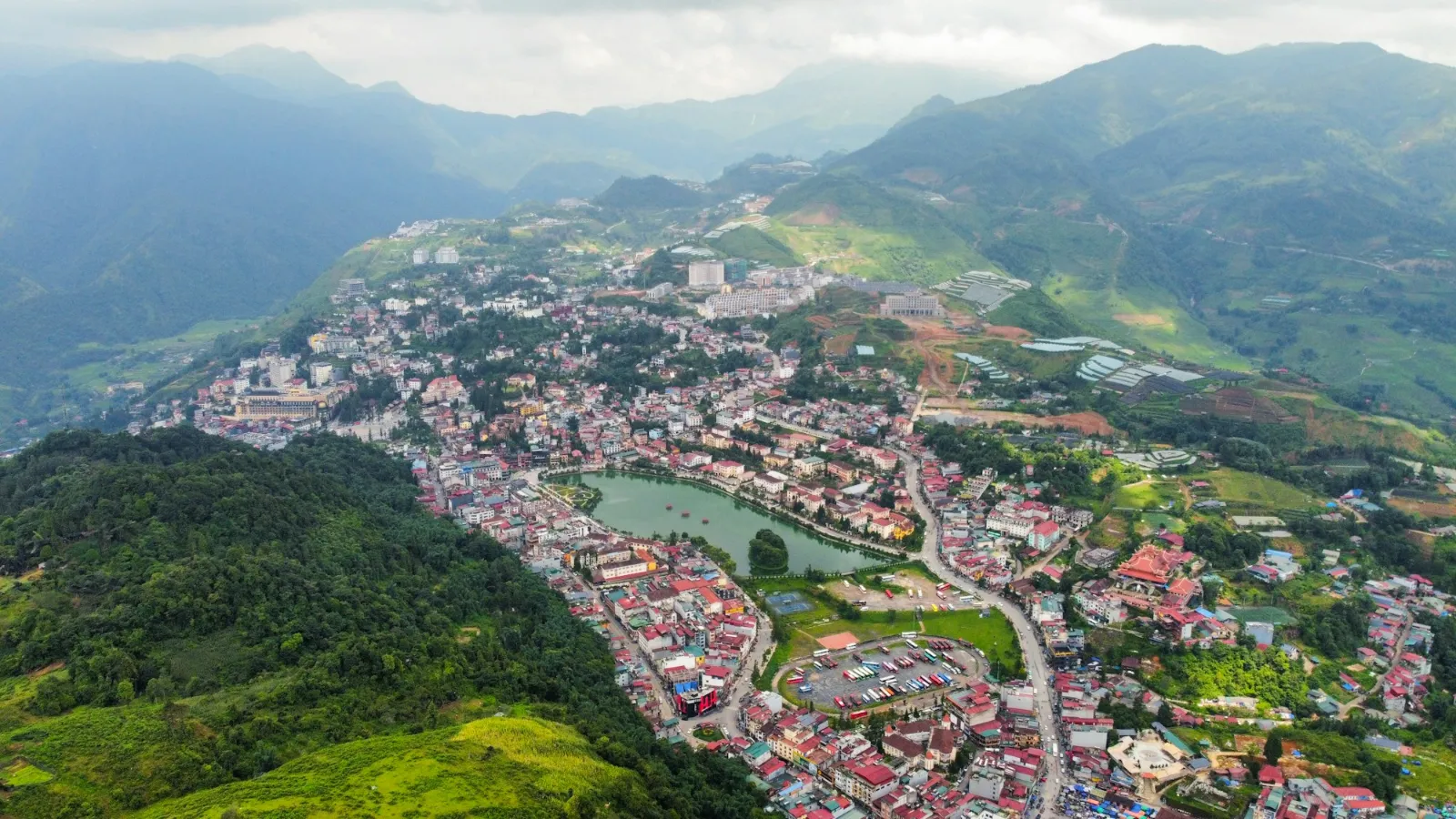
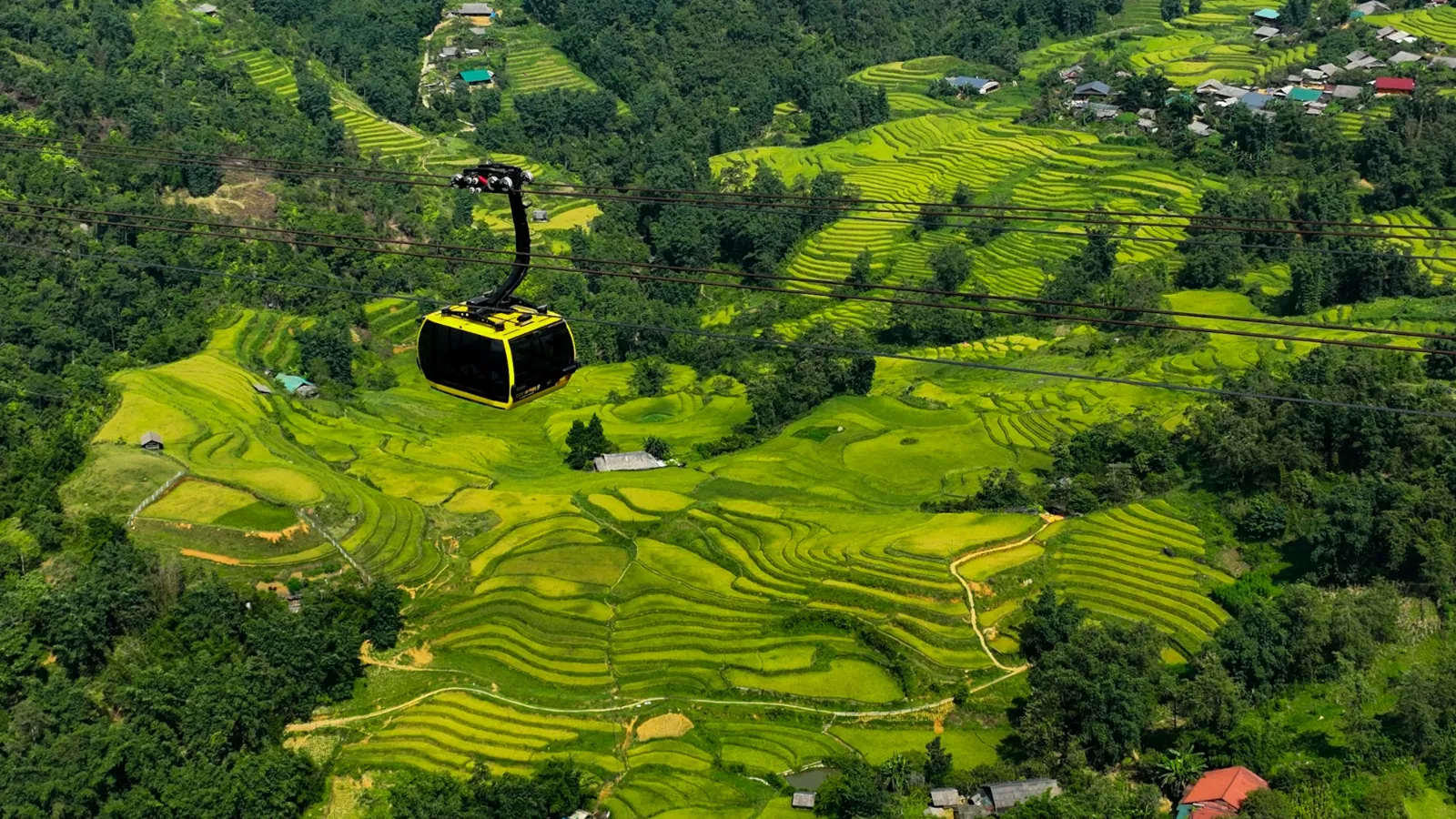
Town is also the easiest base for Fansipan, Vietnam's highest peak. An adult round-trip ticket on the Sun World Fansipan Legend cable car costs VND 850,000 (about US$33) for visitors taller than 1.4 m, according to Sun Group's Sun Paradise Land site, checked November 2026. The cable car leaves from the Muong Hoa valley side, and the ride up takes about 15 minutes, so an early start from a town hotel is simple.
Should you stay near Cat Cat village?
Staying on the Cat Cat side of town makes sense if you want valley views and short walks but still want town restaurants at night. Cat Cat is about 2–4 km from the centre, and the village charges an entrance fee.
Sun Paradise Land lists the adult ticket at VND 100,000–150,000 and says the village stays open until 22:00, checked November 2026. Because the published price range is wide, carry small notes and confirm the price at the gate. Day crowds are heaviest from late morning, so visiting around 08:00 is calmer.
Should you stay in Ta Van or Lao Chai?
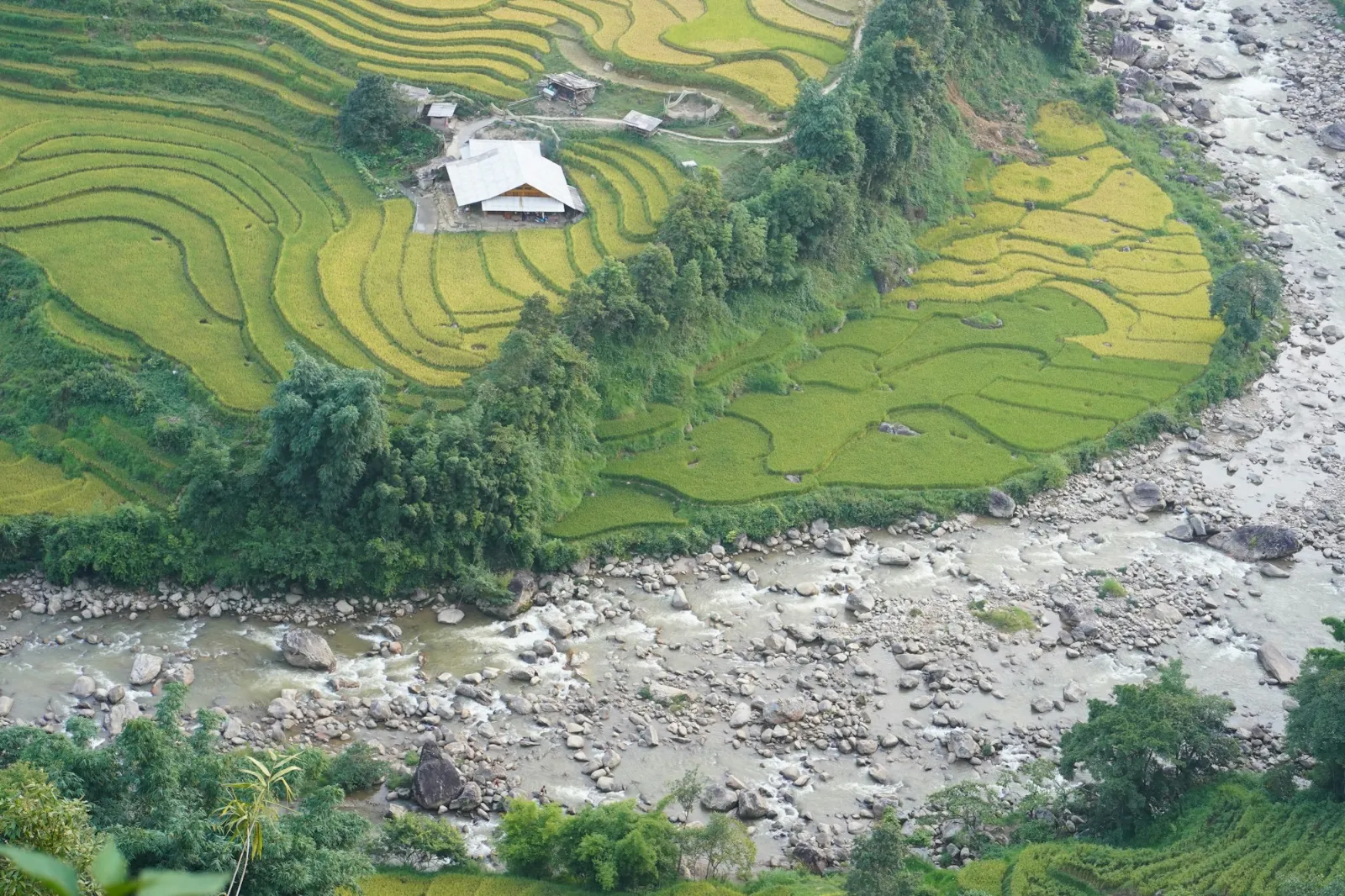
Ta Van is the easiest valley village for a first homestay, and Lao Chai is a quieter alternative a little closer to town. Both sit in the Muong Hoa valley, roughly 7–10 km from the centre, among rice terraces farmed by Hmong and Giay families.
Ta Van has the most guesthouses, cafés and small shops in the valley. Lao Chai and neighbouring Y Linh Ho feel more rural and are often reached on foot as part of a guided walk from town. Expect thin walls, shared spaces and early mornings.
Do not count on finding an ATM in the villages. Bring enough cash for the room, meals and drinks, and read our guide to money in Vietnam for how much to withdraw. Heavy rain can close or damage valley roads, so keep the first night of a trip in town if your arrival day has a storm warning.
Why stay in Ta Phin?
Ta Phin is the best base for the Red Dao herbal bath, a hot soak in water boiled with forest plants. The Lao Cai provincial newspaper (Báo Lào Cai) reports that Ta Phin is about 10 km from the centre and that around 40 households offer herbal baths to visitors, one of the highest numbers in the province.
The same report says each bath recipe uses between 10 and 120 kinds of leaves and stems, a tradition that started as a remedy for new mothers. Sleeping in Ta Phin means you can bathe in the evening and go straight to bed instead of driving back to town in the cold. Fewer tour groups stay overnight here than in Ta Van, so evenings are quieter.
Is Ban Ho worth the extra distance?
Ban Ho is worth it only if you have at least two nights for it. It lies about 25 km from Sapa town through the Muong Hoa valley, which makes it a poor choice for one night.
The centre of Ban Ho is Ban Den village, home to Tay families, where the Muong Hoa and La Ve streams meet, according to Báo Lào Cai. The setting is wider and lower than the upper valley, with terraces running down to the water. Buy any snacks or medicine you need in town before you go.
How does the season change where you should stay?
From December to February, heating matters more than location. Sun Paradise Land puts typical December and January temperatures in Sapa at around 3–5°C, and the Fansipan summit has recorded frost and light snow in some late Decembers (checked November 2026).
Many valley homestays are wooden houses with gaps around doors and windows. In winter, a town hotel with real heating is often more comfortable than a scenic homestay with only an electric blanket. In the rainy summer months, staying in town also gives you a fallback if valley roads are cut. Our best time to visit Vietnam guide covers the northern seasons in more detail.
Lunar New Year needs extra care. Tet falls on 6 February 2027, and rooms around that week fill early and cost more; see our guide to Tet in Vietnam before booking those dates.
What should you check before booking a Sapa homestay?
Check the exact location, the heating, how you pay and how luggage reaches the door. These six points avoid most problems.
- Use the map pin, not the address. Vietnam's 2025 local government reorganisation turned Sa Pa town into Sa Pa ward and grouped the nearby villages into the communes of Ta Phin, Ta Van, Ban Ho, Muong Bo and Ngu Chi Son (Báo Lào Cai, July 2025). Many listings still use older names such as Lao Chai commune or "Sa Pa district", so confirm the pin.
- Ask if a car can reach the door. Some homestays sit on footpaths above the road. With a large suitcase, that matters.
- Leave big bags in town if you walk between villages. Ask your town hotel whether it will store luggage while you spend a night in the valley.
- Ask about heating and hot water. "Heater", "electric blanket" and "gas hot water" mean very different nights in January.
- Check whether the price is per person or per room. Homestay listings mix both, and meals may or may not be included.
- Bring your passport. Under Article 33 of Vietnam's law on the entry, exit and residence of foreigners (2014, amended 2023), the place you stay must declare your temporary residence within 12 hours of arrival, or 24 hours in remote areas, as reported by the newspaper Pháp Luật. That is why even small homestays ask for your passport.
How many nights should you spend in Sapa?
Two nights is the minimum for most travellers: one in town and one in a valley village. Three nights lets you add Ta Phin or Ban Ho without rushing.
- 1 night: Sapa town only. Walk to Cat Cat or ride the Fansipan cable car.
- 2 nights: Town, then Ta Van or Lao Chai after a guided walk down the valley.
- 3–4 nights: Town, a valley village, then Ta Phin for a herbal bath or two nights in Ban Ho.
Sapa fits most north Vietnam routes as a two- to three-night stop; see how it slots into our two-week Vietnam itinerary.
FAQ
Is it better to stay in Sapa town or in Ta Van?
Sapa town is better for a first night, short trips and cold months because food, ATMs and transport are close. Ta Van is better for a second night if you want to walk in the rice terraces and sleep in a family homestay. Many travellers do one night in each.
Do Sapa homestays have heating in winter?
Some do, but many wooden homestays only offer electric blankets. From December to February, ask the host exactly what heating the room has before you book. If the answer is vague, a heated town hotel is the safer choice.
How far is Ta Phin from Sapa town?
Ta Phin is about 10 km from Sapa town by road, according to the Lao Cai provincial newspaper. It is known for Red Dao herbal baths, with around 40 households offering them. Staying overnight lets you take the bath in the evening without a cold drive back.
Do I need cash for a homestay in Sapa?
Yes, bring cash for valley homestays. Card payment is uncommon in the villages, and there are few or no ATMs outside town. Withdraw enough in Sapa town before heading down the valley.
Why does my Sapa homestay ask for my passport?
Vietnamese law requires the place you stay to declare foreign guests' temporary residence within 12 hours, or 24 hours in remote areas. Homestays therefore need your passport details on arrival. Ask them to return the passport once they have recorded it.
Sources (checked November 2026): Báo Lào Cai (baolaocai.vn) reports on Ta Phin herbal baths, Ban Ho and the July 2025 commune changes; Sun Paradise Land (Sun Group) pages on the Fansipan cable car, Cat Cat tickets, Ban Ho and Sapa winter weather; Pháp Luật newspaper on Article 33 of the Law on Entry, Exit, Transit and Residence of Foreigners.